From a question to a useful interface.
The interface responds to the question.
A person can ask for a comparison, evidence, and price in one request. SAII identifies those needs and composes one view from the available business information.

Intent moves through a defined interface.
SAII sits between the request and the business information. It gives the AI system a consistent route for discovering available knowledge, components, and actions.

Every claim keeps its source.
SAII keeps the origin of a claim visible in the interface. People can distinguish information published by the business, material from an outside source, and a synthesis produced by AI.

The question replaces the menu path.
Traditional navigation makes people translate a goal into menus, filters, and page choices. With SAII, the person states the goal and the interface responds to it directly.

One source supports many interfaces.
The business maintains one canonical record. Compatible AI systems can use the relevant fields to produce a comparison, a direct answer, a product view, or an approved action.

Consent stays in the exchange.
When a request involves a business action, SAII makes permission explicit before information moves. The business can act on the approved request, and the resulting status returns through the same interface.

The system retrieves what the request needs.
A conventional page includes navigation, banners, media, and repeated copy. SAII can return the relevant business fields directly, which reduces the work required to interpret an entire page.

Questions reveal what people are deciding.
SAII can group recurring questions by intent, such as comparison, evidence, price, or support. The business sees the decisions people are working through, not only the pages they visited.

The business keeps its source.
The canonical business record does not belong to a single AI platform. If one channel goes away, the source remains available to the other compatible systems connected to it.

Ownership remains separate.
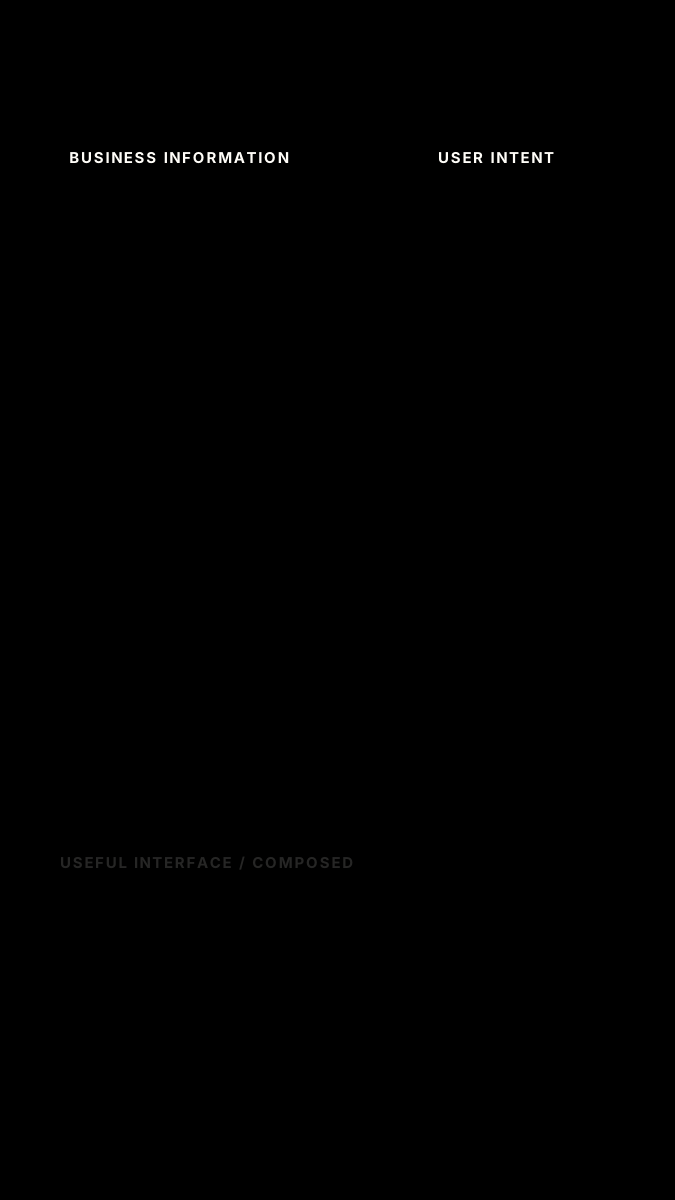
Business information and user intent meet inside a permissioned SAII exchange to produce a useful interface. The exchange uses both without transferring ownership of either one.